
Personas That Actually Work: From Insight to Impact
Most organizations already have personas. Some have statistical segments built from customer data. Others rely on marketing-driven audience groupings. Many have beautifully designed persona decks living somewhere in PowerPoint purgatory.
But few organizations use personas in ways that meaningfully impact customer experience outcomes.
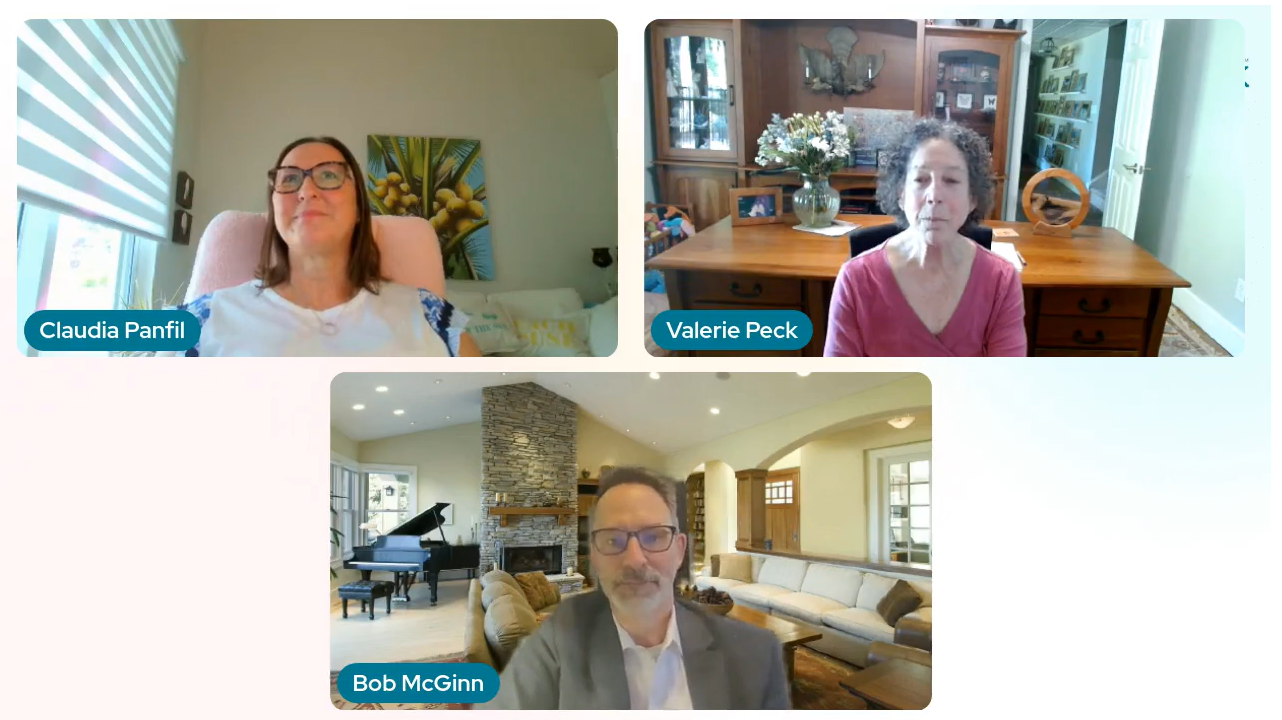
That was the central theme of JourneyTrack’s recent webinar, Personas That Actually Work: From Insight to Impact, featuring customer intelligence expert Valerie Peck and JourneyTrack’s Director of Strategic Accounts & Enablement, Bob McGinn. Drawing on decades of experience across industries, including financial services, retail, telecom, and healthcare, the discussion explored why traditional personas often fail, and what organizations need to do differently.
And the timing couldn’t be better.
According to Forrester, customer experience quality in North America has declined for four consecutive years, reaching an all-time low in 2025. At the same time, organizations are under increasing pressure to personalize experiences, improve retention, and prove business impact.
The challenge? Static personas simply aren’t built for today’s reality.
The “Molly Millennial” Problem
One of the webinar’s most memorable themes was what Valerie Peck jokingly called the “Molly Millennial” problem.
You’ve seen it before:
➡️ A persona built around broad demographics
➡️ A few lifestyle traits
➡️ Generic goals and frustrations
The problem isn’t that these personas are wrong. They are a place to start. It’s that they’re often too simplified to be operationally useful in the long term.
A contact center team needs different information than product teams. Claims teams need a different context than marketers. Retention teams care about different behaviors than acquisition teams.
As Valerie explained during the webinar, the issue is often that organizations build one static persona and expect it to work for everyone.
That’s where the disconnect begins.
Segmentation and Personas Are Not the Same
A key point from the discussion was that segmentation and personas serve different purposes, and organizations need both.
Segmentation is often quantitative:
➡️ Lifetime value
➡️ Revenue contribution
➡️ Churn risk
➡️ Product ownership
➡️ Behavioral clustering
Personas, meanwhile, help make those insights usable across the organization.
As Valerie described it, personas are essentially “stories about segments.”
That distinction matters because many organizations stop at the storytelling layer without connecting personas back to measurable customer behaviors or business outcomes.
Forrester recently warned that personas frequently “don’t live up to their promise” because they become outdated, underused, or disconnected from operational decision-making.
In other words, personas become artifacts instead of assets.
The Shift From Static Personas to Dynamic Customer Intelligence
The webinar focused heavily on a more modern approach, one that treats personas as dynamic, evolving, and behavior-driven.
Instead of a single “Molly Millennial,” organizations should think in terms of context-specific behaviors across the lifecycle:
➡️ Acquisition Molly
➡️ Retention Molly
➡️ Claims Molly
➡️ Product Adoption Molly
Same customer. Different needs. Different emotions. Different behaviors.
This shift is becoming increasingly important as personalization expectations rise.
McKinsey reports that 71% of consumers now expect personalized interactions, while 76% become frustrated when personalization is absent.
But true personalization requires more than demographics.
It requires understanding:
➡️ Buying behavior
➡️ Channel preferences
➡️ Emotional states
➡️ Jobs to be done
➡️ Lifecycle context
Or, as Valerie framed it during the session: “Value, needs, and behavior.”
Why Behavior Matters More Than Demographics
One of the most important ideas from the webinar was that behavior—not demographics—is what makes personas actionable.
A customer’s age or geography may tell you something. But behavior tells you:
➡️ What they’re trying to accomplish
➡️ What frustrates them
➡️ Which channels they prefer
➡️ How they respond under stress
➡️ What drives loyalty or churn
McKinsey’s recent research on consumer behavior also highlights how traditional archetypes are becoming less predictive as customer expectations and digital behaviors evolve.
That’s why leading organizations are moving toward:
➡️ Journey-aware personas
➡️ Lifecycle-specific context
➡️ Real-time customer intelligence
➡️ AI-supported behavioral analysis
Forrester’s 2024 research on customer journey orchestration similarly emphasizes the importance of unified customer understanding and AI-enabled personalization at scale.
There’s No Wrong Starting Point
One of the webinar’s strongest themes was accessibility.
Many organizations assume they need perfect data before they can begin meaningful persona work.
But Valerie and Bob argued the opposite: Start somewhere.
Even early-stage organizations can create valuable proto-personas using:
➡️ Workshops
➡️ Employee knowledge
➡️ Customer interviews
➡️ Contact center feedback
➡️ Surveys
➡️Social listening
Over time, those personas can mature into more sophisticated, data-enriched models tied to:
➡️ Churn
➡️ Retention
➡️ Conversion
➡️ UX signals
➡️ Operational metrics
➡️Financial outcomes
This “maturity curve” mindset removes a major barrier for CX teams that feel overwhelmed by the complexity of customer intelligence initiatives.
As Bob noted during the webinar: “Progression matters more than perfection.”
AI Is Changing Persona Development
Another major topic was the growing role of AI in persona creation and management.
Historically, persona development involved:
➡️ Weeks of interviews
➡️ Synthesis workshops
➡️ Manual clustering
➡️ Presentation creation
Now, AI can dramatically accelerate that process.
Organizations can increasingly use AI to:
➡️ Cluster qualitative research
➡️ Identify behavioral patterns
➡️ Synthesize customer interviews
➡️ Generate proto-personas
➡️ Refine personas dynamically over time
That aligns with broader industry trends.
McKinsey notes that AI-powered personalization is becoming a key driver of growth, efficiency, and customer relevance across industries.
At JourneyTrack, this is where tools like Persona AI come into play.
JourneyTrack supports persona development across the maturity spectrum, from AI-generated proto-personas for organizations just getting started to more advanced, data-driven persona frameworks connected directly to journeys, insights, and business outcomes.
The goal isn’t simply to create personas faster. It’s to make them more usable.
Personas Should Drive Decisions, Not Just Alignment
Ultimately, the webinar reinforced a simple but important idea:
Personas are not the end goal. Business impact is.
That means personas should help organizations:
➡️ Improve acquisition
➡️ Reduce churn
➡️ Personalize journeys
➡️ Align teams
➡️ Prioritize improvements
➡️ Operationalize customer intelligence
The organizations seeing the strongest CX outcomes today are those moving beyond static visualization toward operational, behavior-driven journey management.
As part of that, personas need to be a living system of customer intelligence that evolves with the customer and helps organizations make smarter decisions at every stage of the journey.
Watch the webinar here.
Subscribe to our blog and stay in the know.